Amber lighting is really cool, and you might think that it's the perfect setup for your rig. In this blog, we'll compare amber lighting with white lighting to help you decide which is best for the off-road trail industry. Be sure to read through to the end, as the results might surprise you.
White Lights and Why They're Great
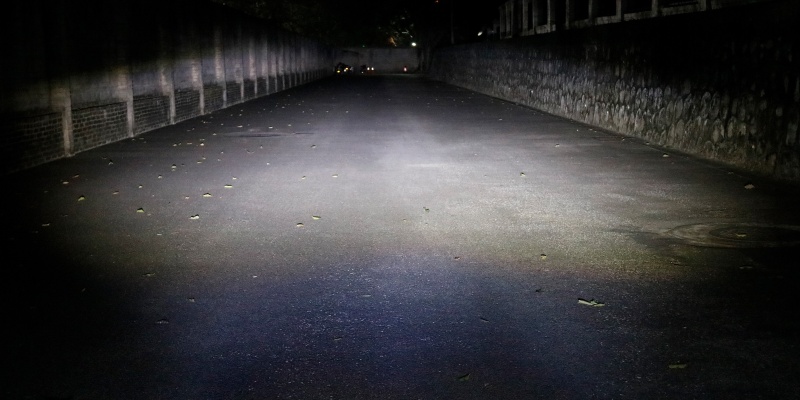
Let's go over white lights first. The first reason why you should definitely consider buying white lights over amber lights is the fact that they illuminate the objects in front of you much better than amber lights. There is some scientific background behind this, but we'll focus on a few key points that are important to understand.
Most off-road lights, especially LEDs, run around 5,000 to 6,500 Kelvin, compared to amber lights, which typically run around 2,700 to 3,000 Kelvin. So, what exactly is a Kelvin? In off-road lighting, Kelvin refers to the actual color temperature. It doesn't measure brightness; it measures the color appearance of the light. Just because white lights have that higher Kelvin doesn't mean they are necessarily brighter. It just means that the white light has shorter wavelengths. This cooler, more natural color helps light up everything in front of you more accurately and sharply, enhancing shadows and edges, so you can really dial in on stuff.
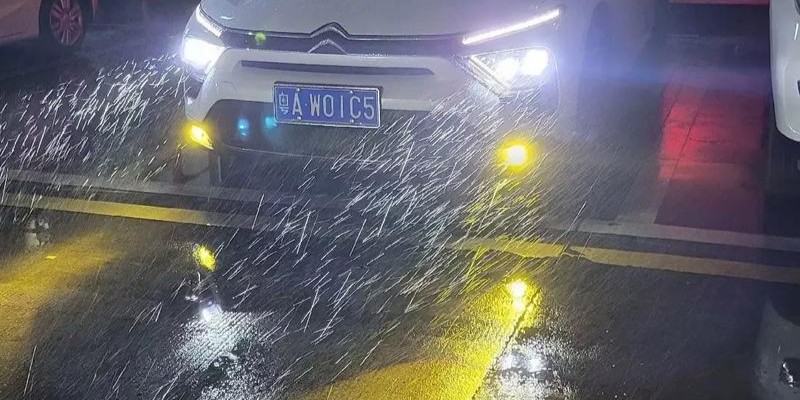
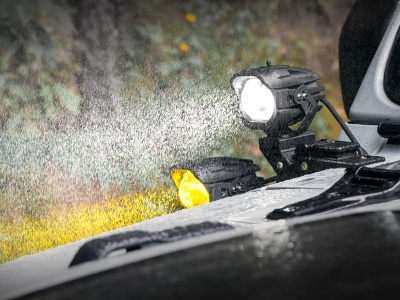
So, when you're out riding desert trails, open logging roads, or rock crawling in the summer, white lights are definitely going to help you see much better in those situations. However, there is one drawback: white light scatters. In dust, fog, rain, or snow, all that crisp white light hits moisture or particles in the air and bounces right back into your eyes. That's called backscatter. Your eyes are already working harder, and your vision is compromised. For those who struggle with night driving, especially in wet conditions or when feeling fatigued, this effect can be even more pronounced.
Amber Lights and Their Effectiveness in Challenging Conditions
So, if you tend to drive in dusty, foggy, or wet conditions more than not, amber lights might be the right choice for you. But are amber lights the best choice for you? Can they actually hold up to what day-to-day lights can do? Let's take a closer look at what "amber" means in terms of lighting. It's not just one shade fits all.
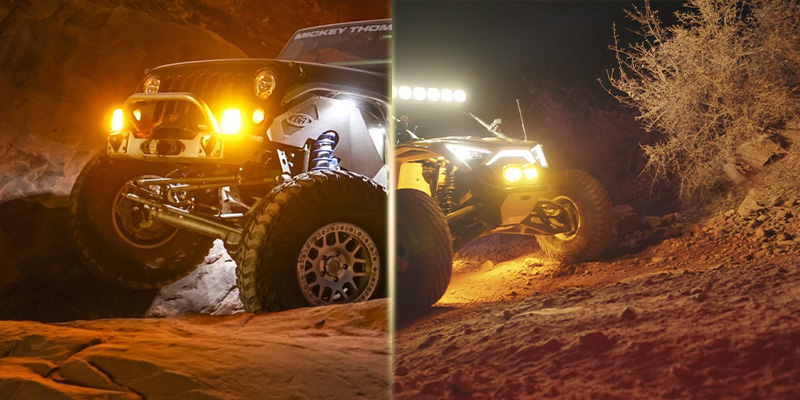
Amber lights come in a range of Kelvin temperatures, generally from around 2,000 to 3,000K. Some are deep orange, while others lean more towards a rally racer yellow. The deeper orange tones are stylish but somewhat less functional, while the yellower lights are designed for speed, perfect for high-speed dusty trails. Others offer a more industrial-grade amber, built for toughness and reliability, making them great for heavy-duty applications. There are also amber lights with white LEDs behind amber lenses, providing a balanced amber hue that is neither too orange nor too yellow. These lights strike a nice balance between function and style. Some amber lights come in a warmer tone, which is ideal for fog, sand, and dust, giving a retro look while still being practical in challenging conditions. Lastly, some manufacturers use true amber emitters that prioritize performance and clarity, focusing on providing functional, no-nonsense lighting for those who need reliability in tough environments.
While there's variation in the shades and effectiveness of amber lighting, all of them are designed with specific off-road needs in mind, making them valuable depending on your particular conditions.
Amber Lights for Better Visibility in Bad Conditions
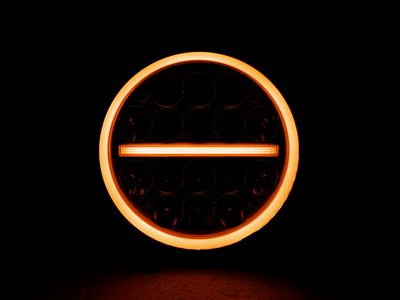
Amber lights offer a completely different benefit that white lights simply can't match. Typically running around 2,700 to 3,000 Kelvin, amber lighting gives off a much warmer yellow-orange tone. In bad weather or dusty conditions, such as during a convoy, on a dry trail, or even when snowmobiling in the Midwest, amber lights help your eyes see further down the trail with less reflection, making it easier on your vision over extended periods of time.
Have you ever noticed that fog lights on stock vehicles usually tend to lean in yellow? That's an easy indicator that shows you amber lighting is built for that. It doesn't blind you, and it doesn't flatten the terrain the way that white light can when it hits the fog or snow.
Reducing Eye Fatigue with Amber Lights
And here's something a lot of people don't think about: eye fatigue. Overlanding or trail riding at night for hours, especially in wooded or shaded terrain, that white light is going to strain your eyes. When you go from a dark section to a blast of white LED, your eyes are going to be fighting for your life over and over again. Those little moments that take time to recover could literally change a good time on the trail to a very rough one.
The Trade-Off: White vs. Amber
Of course, amber's not perfect either. Rocks, ruts, and obstacles might not pop the same with amber lighting. So, you have to be okay with trading a bit of detail for better visibility in specific conditions.
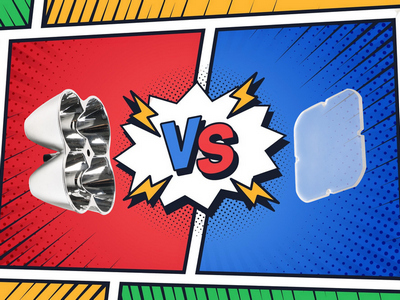
After evaluating both types of lighting, it really comes down to a few different categories. For poor visibility, you're going to want to run with amber. This will help cut through fog, rain, snow, or whatever is in your way. For open trails at higher speeds, you're definitely going to want to go with white lighting. This will help cut through and show you those potential obstacles that you're about to hit.
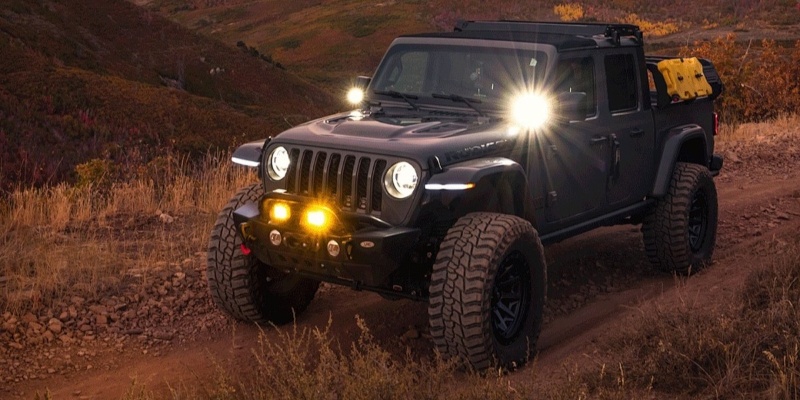
For nighttime driving, amber is the way to go. It will cut down on the strain on your eyes. So, the smartest decision, the winner of the white versus amber lighting, is white lighting with some amber lighting. Let's be honest: the perfect combination is when you combine these two lights. You have the white lights for that visual confidence—the ability to see the things that are happening in front of you—while you have the amber lights to help with eye strain, to help cut through fog, rain, or snow.
So, the ideal setup for anyone who's going to be off-road or overlanding is to mix and match. With both white lighting and amber lighting, you'll be ultimately prepared for anything. That's the winner.








 2026-06-12
 info@ogaled.com
  0086 135-6015-6476
  Room 505, 5th Floor, Jiangyun Building, No. 5 Heguang 2nd Cross Road, Tianhe District, Guangzhou