A Complete Guide for LED Lighting Designers and Manufacturers
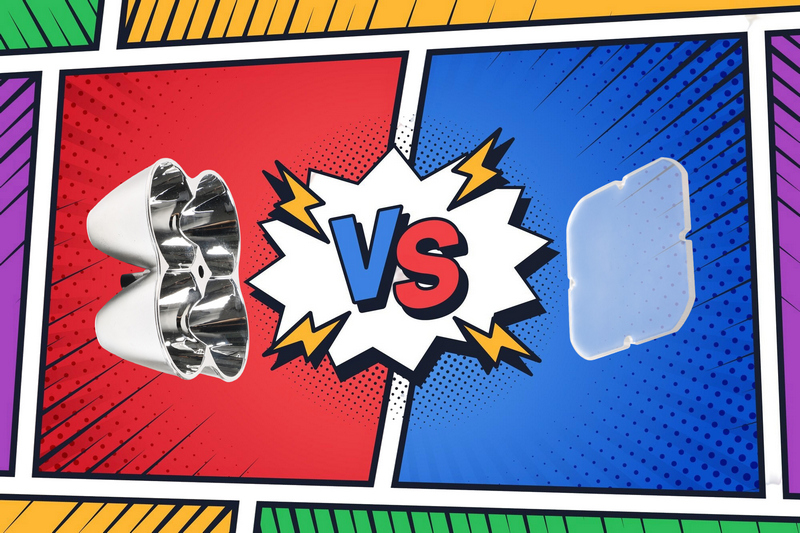
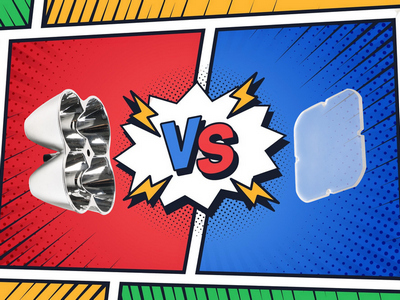
In LED lighting design, reflector cups and lenses are two of the most important secondary optical components. They directly affect light efficiency, beam angle, spot quality, glare control, and overall lighting comfort.
However, many lighting designers, engineers, and lamp manufacturers still confuse the functions of LED reflector cups and LED lenses during product selection. Choosing the wrong optical component may lead to low light efficiency, uneven beam patterns, excessive glare, or poor compatibility with the final lighting fixture.
This guide explains the key differences between reflector cups and lenses, including their working principles, materials, optical performance, and typical application scenarios.
What Is an LED Reflector Cup?
The original beam angle of an LED light source is usually around 120 degrees, which is too wide for many directional lighting applications. An LED reflector cup is a cup-shaped optical component designed to control light through reflection.
It helps adjust the lighting distance, illumination area, beam angle, and spot effect. Because of its simple structure and cost efficiency, the reflector cup is widely used in many LED lighting fixtures.
Main Types of LED Reflector Cups
Metal Reflector Cup
Metal reflector cups are usually made from aluminum through stamping, polishing, anodizing, or surface treatment processes. They offer good heat resistance, stable performance, and relatively low production cost.
They are commonly used in industrial lights, floodlights, high-temperature lamps, and other applications where durability and cost control are important.
Plastic Reflector Cup
Plastic reflector cups are produced through precision molding. They offer higher optical accuracy, better consistency, and more stable beam performance.
However, plastic reflector cups usually cost more than metal reflector cups and have lower heat resistance. They are more suitable for indoor lighting fixtures and normal-temperature environments.
Optical Features of Reflector Cups
An LED reflector cup usually creates both a main beam and a secondary beam. The secondary beam helps form a softer transition around the main spot, reducing harsh glare and creating a more comfortable layered lighting effect.
This makes reflector cups suitable for applications where visual comfort and soft light distribution are important.
What Is an LED Lens?
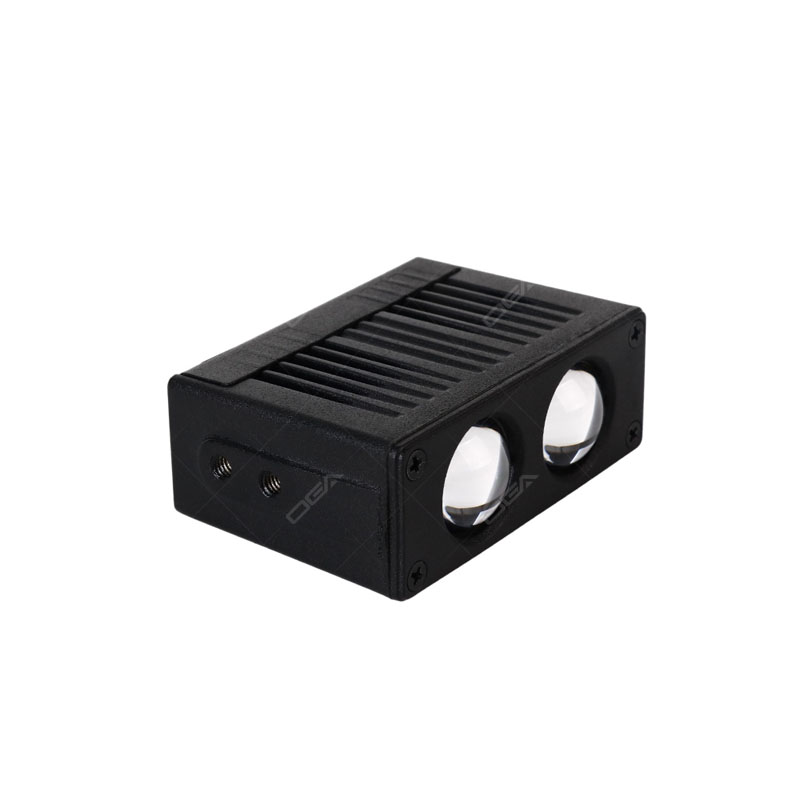
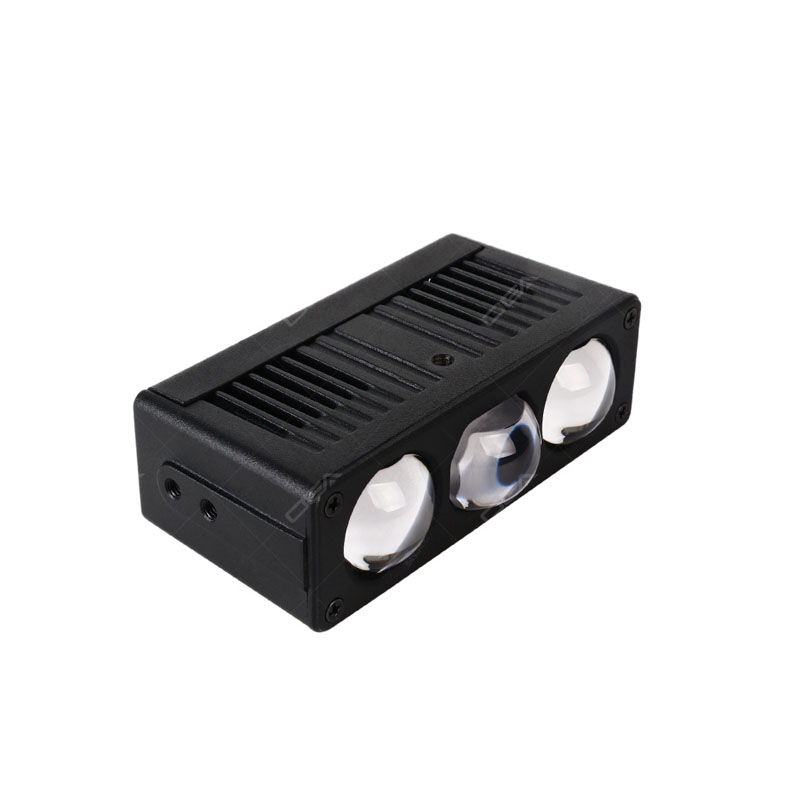
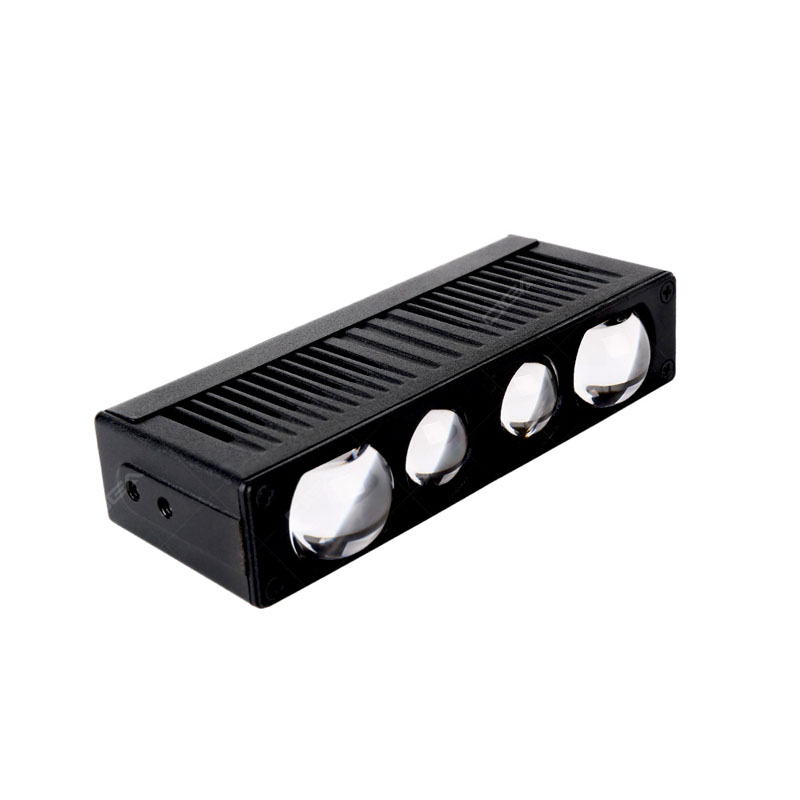
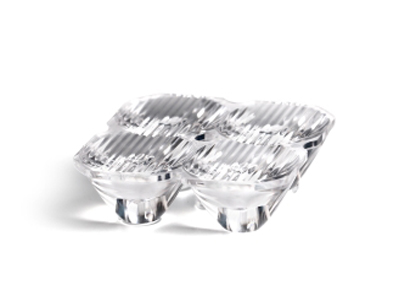
An LED lens, also called an LED secondary optical lens, is closely matched with the LED chip to control light through refraction and total internal reflection.
Compared with reflector cups, lenses can achieve more precise focusing, cleaner beam shapes, and higher optical efficiency. They are widely used in applications that require narrow beam angles, long-distance projection, or highly controlled light distribution.
LED Lens Materials: PMMA vs PC
Most LED lenses are made from PMMA or PC.
PMMA Lens
PMMA, also known as acrylic, offers excellent optical clarity with light transmittance of up to about 93%. It is ideal for lighting products that require high light efficiency and clean beam output.
However, PMMA has lower heat resistance, usually around 90°C, so it is mainly used for indoor or normal-temperature lighting applications.
PC Lens
PC, or polycarbonate, offers stronger heat resistance and impact resistance. Its heat resistance can reach around 135°C, making it suitable for outdoor lights, high-temperature lamps, and more demanding environments.
Its light transmittance is usually around 88%, slightly lower than PMMA, but it provides better durability and thermal stability.
TIR Lens Technology
Many LED lenses use TIR, or Total Internal Reflection, optical design. The front surface focuses direct light, while the conical side structure collects and redirects side light.
This design helps reduce stray light, improve beam uniformity, and achieve optical efficiency of over 90%. TIR lenses are especially suitable for beam angles below 60 degrees and applications that require long-distance illumination.
Reflector Cup vs Lens: Key Differences
| Comparison Item |
LED Reflector Cup |
LED Lens |
| Optical Principle |
Controls light mainly through reflection |
Controls light through refraction and TIR focusing |
| Beam Effect |
Soft transition with secondary beam |
Cleaner and more uniform beam shape |
| Optical Efficiency |
Standard efficiency |
Higher efficiency, often over 90% |
| Glare Control |
Better for close-range visual comfort |
Better for precise directional lighting |
| Application Distance |
Short to medium range |
Medium to long range |
| Temperature Resistance |
Metal types offer strong heat resistance |
PC lenses offer better heat resistance than PMMA |
| Typical Applications |
Downlights, wall lamps, general lighting |
Spotlights, floodlights, wall washers, high bay lights |
There is no absolute answer to which one is better. The right choice depends on the lamp type, installation height, beam angle, lighting distance, temperature environment, and visual comfort requirements.
How to Choose for Different LED Lighting Applications
Downlights and Wall Lamps
Downlights and wall lamps are usually installed close to people’s eyes, so glare control and visual comfort are important.
For these applications, LED reflector cups are often the better choice. Their soft secondary beam creates a more natural light transition and helps reduce discomfort in corridors, entrances, hotels, homes, and commercial indoor spaces.
Floodlights and Spotlights
Floodlights and spotlights are often used for long-distance illumination, object highlighting, and outdoor projection.
LED lenses are usually preferred because they provide stronger focusing ability, higher light intensity, and cleaner beam control. For single-source spotlights, Fresnel lenses or TIR lenses can deliver longer projection distance and better beam concentration.
Wall Washer Lights
Wall washer lights require even light distribution across vertical surfaces. If reflector cups create secondary spots, the wall may appear uneven or visually messy.
LED lenses usually perform better in wall washer applications because they help produce a cleaner, more uniform beam without obvious stray light or unwanted shadows.
Industrial High Bay Lights
For industrial high bay lights, the best choice depends on the installation height.
For lower factory ceilings, toll stations, and areas requiring softer light distribution, reflector cups can be a practical and cost-effective solution.
For high-rise workshops, warehouses, stadiums, and large venues that require long-distance illumination, LED lenses are more suitable because of their stronger focusing ability and higher optical efficiency.
Final Thought
LED reflector cups and LED lenses are both essential secondary optical components, but they serve different lighting purposes.
Choose an LED reflector cup when the project requires soft light transition, comfortable visual performance, cost efficiency, and short-to-medium-range illumination.
Choose an LED lens when the project requires long-distance projection, precise beam control, clean spot performance, narrow beam angles, and higher optical efficiency.
For lamp manufacturers and lighting engineers, the best solution should be selected according to the lighting fixture type, installation environment, beam angle, temperature resistance, and optical performance requirements.
Working with reliable LED reflector cup and LED lens manufacturers can help improve product performance, reduce development risks, and create more competitive LED lighting solutions.








 2026-06-12


 info@ogaled.com
  0086 135-6015-6476
  Room 505, 5th Floor, Jiangyun Building, No. 5 Heguang 2nd Cross Road, Tianhe District, Guangzhou